
Named Best Insurance Innovation at the Finder Innovation Awards 2026

Industry Insights
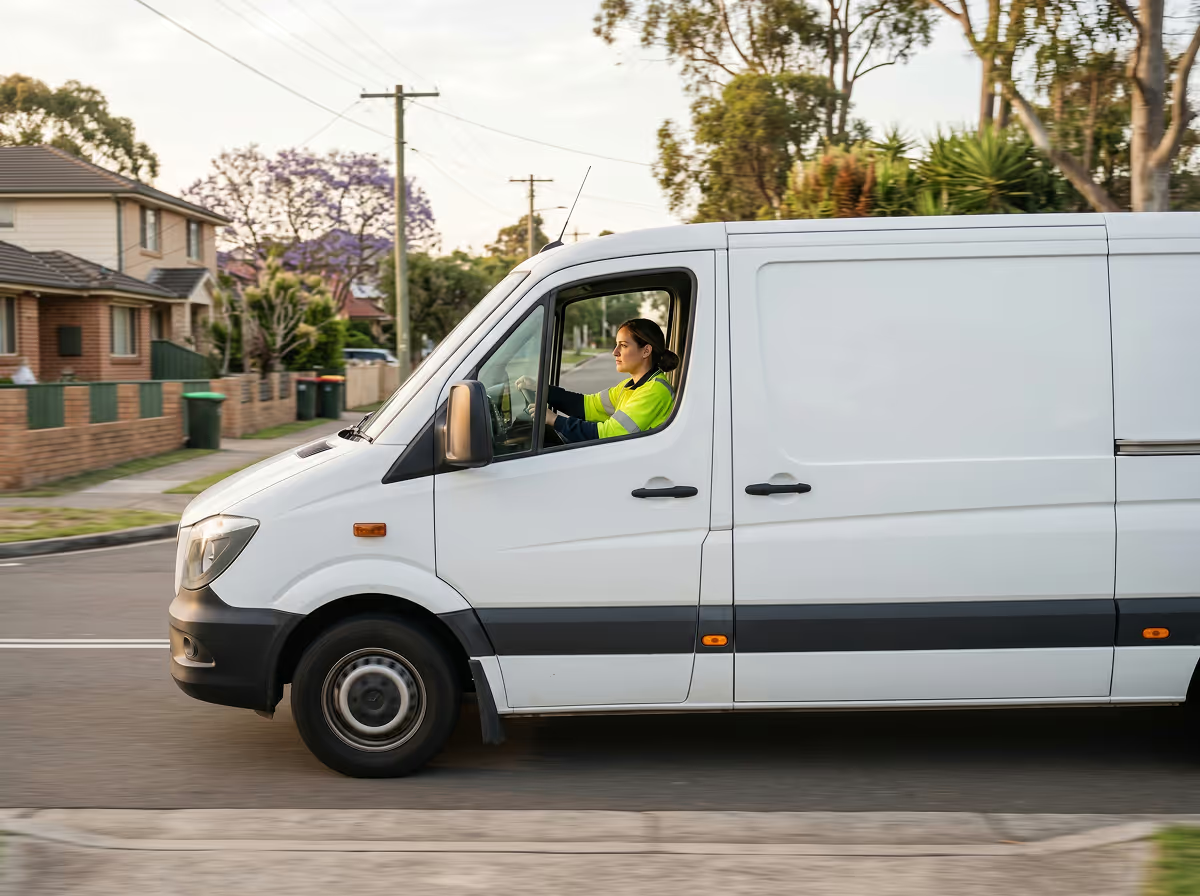

Transit insurance covers physical loss or damage to goods while they're being moved within Australia by road, rail, sea, or air. This guide focuses on business cargo — goods moved by manufacturers, wholesalers, retailers, and service businesses — though policies also exist for household moves and international freight.
Here's what many business owners don't realise: a carrier's liability is usually a fraction of your cargo's value. A $50,000 shipment might only be covered for a few thousand dollars under standard carrier terms. That's why many logistics providers and major clients require proof of transit insurance before work can begin.
Transit insurance is cover for physical loss or damage to goods while they're being moved between locations within Australia — for example, from a factory to a warehouse, or from a warehouse to a customer. It protects your cargo during the journey itself, filling the gap between what carriers are legally responsible for and the actual value of your goods.
Modern transit insurance policies are multimodal, covering goods transported by various modes including temporary storage. Several terms describe this type of insurance, and understanding the differences helps when comparing policies:
Policies can apply to one-off consignments or to all movements over a 12-month period through an annual or open policy structure. Annual open policies are common for frequent shippers; single transit policies are common for occasional or high-value consignments.
Businesses across multiple industries carry transit risk. Manufacturers shipping finished goods to distribution centres face daily exposure. Wholesalers move stock between warehouses. Retailers import via local freight forwarders. Tradies transport tools and materials to job sites. E-commerce sellers send orders around Australia every day.
Even if your freight company "has insurance," their cover is usually capped at a small amount per tonne or per package — rarely equal to the true value of the cargo. For a deeper look at the gap between carrier cover and freight insurance, see carrier liability vs freight insurance.
For individuals moving house: if you're relocating personal belongings between residences, you'll typically need a different style of cover. Some contents policies offer limited protection during a move, but standalone moving insurance from removalists or specialist providers usually offers more comprehensive protection for accidental damage.
Transit insurance generally covers accidental physical loss or damage during transit — from the point goods are first moved for loading until final unloading at the destination. Goods in transit policies typically respond to insured events such as collision, fire, flood, or theft during transit by road in Australia.
Cover can apply to road, rail, coastal shipping, and domestic air freight within Australia, including Tasmania and external territories. Import and export legs typically require a separate marine transit policy. Most policies specify whether cover is "door-to-door" and whether temporary storage during the journey at depots or cross-docks is included — common limits are around 48–72 hours, though some marine policies extend further.
Cover under transit insurance can also include accidental damage during loading and unloading, as well as malicious acts by third parties such as vandalism and sabotage.
Every transit insurance policy includes exclusions and financial limits that affect what's protected. These vary between insurers and policies, so the product disclosure statement is the source of truth.
Policy documents define the exact start and end of cover, which may differ for motor vehicle transport versus general cargo. For vehicles, caravans, and trailers, cover often commences when the item is first moved a short distance toward the carrying conveyance for immediate loading.
For general cargo, cover typically attaches when goods are first moved for loading onto the carrying vehicle and ceases when goods are unloaded at the final place of delivery, or after a set time limit post-unloading — whichever happens first.
Example journey: A pallet of electronics valued at $35,000 is picked up from a Melbourne warehouse for delivery to a Sydney retailer. Cover attaches when the pallet is first moved toward the truck. The goods travel overnight by road, arriving in Sydney the following morning. Cover ceases when the pallet is unloaded.
Businesses generally choose between single transit policies and annual open policies, and between inland-only and marine transit cover depending on routes and modes. Some insurers package transit cover within broader business property or marine cargo policies.
A single transit policy covers one specified shipment — often used for occasional or high-value one-off moves, such as relocating machinery. An annual open policy covers all transits within a defined period (usually 12 months) up to agreed limits, and is commonly used by regular shippers.
The cost of transit insurance varies based on factors like business location, coverage amount, and the specific risks of the goods being transported. Marine transit premiums are influenced by the declared value of the shipment, the type of goods, and the transit routes taken — higher risks generally lead to higher costs.
Geographical risk matters too: routes through high-risk areas can attract higher premiums and may require specialised cover. Businesses with strong risk management — GPS tracking, secure depots, a good claims history — may qualify for premium discounts.
Transit insurance can be arranged directly via insurers who offer cover online, through an insurance broker specialising in transport and marine, or packaged into a freight carrier or platform's offering. Many providers quote within 24–48 hours once information is supplied. Cover must be in place before transit commences.
If damage or non-delivery occurs, the priority is to mitigate further loss, notify the insurer or broker as soon as possible, and keep damaged items and packaging safe. Claims must be made by the policyholder, and most insurers accept claims through several channels including online forms, email, or phone.
Claims are generally settled based on the invoice or sale price of the goods, or the current market value if no recent sale occurred. Lodging a claim promptly helps avoid delays. For a step-by-step walk-through, see how to make a freight claim in Australia, or lodge a claim directly.
If freight has been damaged in transit, this guide to your rights when freight is damaged in transit in Australia is a useful next read.
Transit insurance differs fundamentally from public liability insurance. Liability policies respond to legal responsibility to others — if negligence causes injury or damage to someone else's property, public liability covers that. Transit insurance is first-party cover that protects your own goods regardless of fault.
Contents insurance for households may include limited cover for items during a move, but often excludes loading, unloading, and temporary depot storage. Removalist insurance covers the moving process specifically. Carriers' and freight forwarders' liability policies — often called cargo liability — protect the carrier, not the cargo owner, and their limits are typically inadequate for the full value of goods.
Carrier liability alone leaves a gap between what the carrier will pay and what cargo is actually worth. Transit insurance closes that gap.
The next step is straightforward: list typical shipments, routes, and maximum load values, then get a quote or book a demo to talk through the right policy structure.
.avif)
Company News

Industry Insights

Company News