
Named Best Insurance Innovation at the Finder Innovation Awards 2026

Industry Insights
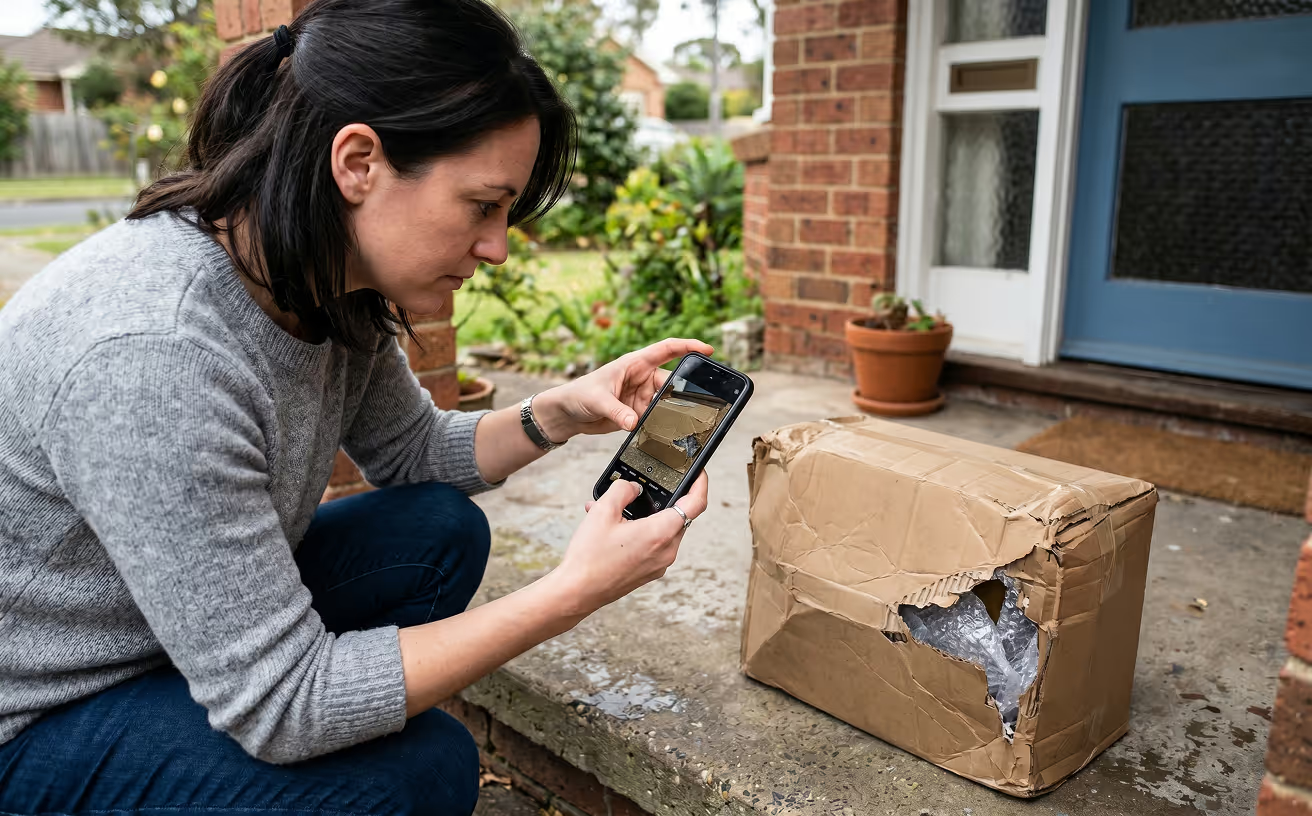

Something went wrong. A shipment arrived damaged. Or it didn't arrive at all.
It's a frustrating moment — and the last thing you need is a confusing claims process on top of it. This guide walks through what generally happens, in the right order, to give a claim the best chance of a clean outcome.
One thing worth knowing upfront: the claims process looks quite different depending on whether a business has freight insurance or is relying on its carrier's liability. Both pathways are covered below.
This is the most important section in this guide.
Most carriers have strict notification windows. For visible damage, that window is often as short as 24 to 72 hours. For concealed damage — where the packaging looks fine but the goods inside are not — it's typically seven days. Miss those windows and the right to claim may be lost entirely.
Check the carrier's specific terms and conditions. As a general rule: assume 24 hours and act accordingly.
A few things to do before anything else:
The window to act is narrow. Everything else in this guide can wait a few minutes. This step can't.
Good documentation is the single biggest factor in whether a freight claim succeeds. The more thorough it is now, the smoother the process will be.
What to gather:
Photographic evidence
Delivery documentation
Commercial documentation
Tip: If damage isn't obvious at the point of delivery — e.g. goods are double-boxed and the inner damage isn't visible — a common approach is to write "received unchecked, subject to inspection" on the POD before signing.
Keep all of this in one folder. It'll be referenced throughout the process.
Here's where the process splits.
If freight insurance is in place (such as FreightInsure)
Notify the insurer directly. There's no need to negotiate with the carrier or wait for them to accept liability — that's the insurer's job.
Contact FreightInsure and submit the claim with the documentation from Step 1. FreightInsure targets resolution of most claims within five business days, subject to receipt of required documentation and the specifics of each claim.
What to include:
If relying on carrier liability
The carrier needs to be notified in writing and the claim formally lodged against them.
It's worth understanding what carrier liability means in practice. Most Australian road freight and logistics operators contract on a "not a common carrier" basis — meaning their liability is defined by their terms and conditions rather than by a default legal standard. Many carriers significantly limit their liability, and some exclude it entirely for certain goods or circumstances. Always check the specific carrier's terms.
The carrier will assess whether they are liable under their own terms. This process can take weeks. Some claims are partially paid; many are declined.
Whether claiming through an insurer or directly against a carrier, everything should be in writing.
A formal claim should include:
Send via email and keep a copy of everything, including the timestamp. The lodgement date starts the clock on the insurer's or carrier's response obligations.
For online portals, screenshot the submission confirmation.
Once the claim is lodged, an assessor will review it against the policy terms (for insurance) or the carrier's conditions (for carrier claims).
They may come back for additional documentation — more photos, a repair quote, a replacement invoice. Respond promptly. Delays on the claimant's side extend the timeline.
For freight insurance claims: The claims team manages the process from here. FreightInsure targets resolution within five business days, subject to required documentation and the specifics of each claim.
For carrier liability claims: There's no mandated timeline under the carrier's T&Cs. Follow up in writing, and keep records of every communication.
Throughout this period:
A declined claim isn't necessarily the end.
Ask for the reason in writing. Policyholders are entitled to a clear reason. Get it in writing, not over the phone.
For insurance claims — use the dispute resolution process:
Australian general insurers operate an internal dispute resolution (IDR) process under ASIC Regulatory Guide 271. If a claim is declined, policyholders can request an internal review, which must be completed within the timeframe set by ASIC (generally 30 calendar days for most complaints).
If the outcome remains unsatisfactory, escalation is available to the Australian Financial Complaints Authority (AFCA) at afca.org.au. AFCA is a free, independent external dispute resolution service, subject to its jurisdictional limits and eligibility criteria (including definitions of "small business" and compensation caps). AFCA can review the insurer's decision and make determinations that are binding on the insurer.
For carrier liability claims — options are more limited:
If a carrier declines liability, the options depend on their terms. Many carriers include their own dispute resolution or mediation clauses. In some cases, the only remaining avenue is legal action — which is often costly relative to the value of most freight claims. For guidance on specific situations, seek your own legal advice.
This is one of the differences between relying on carrier liability and holding independent freight insurance: the dispute process for a carrier claim sits within the carrier's own framework.
Understanding why claims fail is useful even before something goes wrong.
Insufficient documentation. No photos, no POD notation, no invoice. Without evidence, there's nothing to assess. The burden of proof sits with the claimant.
Notification was too late. The window passed. Always check the carrier's terms and act within 24 hours if uncertain.
Goods were excluded from coverage. Many carrier terms exclude fragile items packed by the owner, certain goods categories (art, antiques, perishables), or goods without adequate commercial packaging. Policy terms on insurance products similarly list exclusions.
The carrier's liability was contractually limited. Australian carriers often cap their liability per kilogram or per consignment. For high-value goods, the cap may cover a fraction of the loss.
The claim was below the excess threshold. Some insurance policies — including many marine insurance products — carry an excess of A$1,000 or more. Where the loss is below the excess, the net payout is nil. FreightInsure has no excess on its product.
The starting point is usually the commercial invoice value of the goods — what was paid for them, or what they were sold for.
From there, the assessor may consider:
One important caveat: freight claims generally don't cover consequential losses — refer to the policy's specific exclusions for detail. If a shipment delay caused a business to lose a client, miss a deadline, or incur penalty costs, those losses typically sit outside the scope of a freight claim.
For high-value goods, make sure the declared value at booking matches the actual replacement cost. If the declared value is lower than the actual value of the goods, payouts may be adjusted according to the policy's terms.
Before lodging, run through this list:
How long is there to make a freight claim in Australia?
It depends on the carrier's terms and conditions or the insurance policy. For visible damage, assume 24–72 hours. For concealed damage, most carriers allow around seven days. Check the specific terms and assume the window is short.
Can a claim be made for damaged packaging if the goods themselves are fine?
Generally, no — freight claims are assessed on loss or damage to the goods themselves, not the packaging. However, if the packaging damage indicates a handling issue that could have caused internal damage, document it thoroughly. It supports any later claim if internal damage is discovered.
What if the carrier says they're not liable?
Get the reason in writing. Then review their terms and conditions against their stated position. For businesses with freight insurance, the insurer handles this question. For those relying on carrier liability, mediation (where available) or legal action are typically the remaining avenues — consider your own legal advice.
Does freight insurance cover the full value of goods?
Cover is provided up to the policy limit, based on the declared value of the goods. For FreightInsure, the limit is AUD 100,000 per consignment, domestic or international. Make sure the declared value at booking matches the actual goods value — under-declaring can affect the payout.
What's the difference between a freight claim and an insurance claim?
"Freight claim" is the broad term for any claim for loss or damage during transit. "Insurance claim" specifically refers to a claim made against an insurance policy — in this case, with the insurer rather than the carrier. The key practical difference is who's assessing: an independent insurer, or the carrier whose handling is in question.
If this process felt harder than it should
It often is — particularly when the carrier is being asked to objectively assess a claim for their own handling error.
Freight insurance offers a different structural pathway. The claim is assessed by an independent insurer, with no excess on FreightInsure's product and a documented resolution target — rather than being negotiated with the carrier responsible for the goods.
.avif)
Industry Insights
.avif)
Company News

Industry Insights