
Named Best Insurance Innovation at the Finder Innovation Awards 2026

Cartons often travel hundreds of kilometres and touch many hands. Make sure your carton is ready for the journey.

You should be packaging your goods in the manufacturer's carton or a similar new carton. If the carton is used, you need to ensure it is in excellent condition with no compromise to its structure.

The carton must have its internal flaps intact which add to the structure of the parcel. If these are not in place, do not use the carton.

While we strongly encourage you to use the manufacturer's original cartons, displaying branding from high-end manufacturers is not encouraged, with generic brown cartons being preferred.

If there are any labels on the box from a previous shipment, they must be removed. Cartons with multiple labels have a significantly higher chance of being lost in transit.

Noting that a carton often travels thousands of kilometres and touches many hands, ensure that your labels are stuck down adequately for transit.

Labels must always be on the top of the carton where they are easy to read and never underneath the carton.

When sealing the carton, use strong tape designed for shipping. Ensure that all exposed edges of the carton are sealed using the H-tape method.
What's inside matters as much as the box itself.

Do not leave excess space in the carton around the goods. This will mean that your goods will stay secure in transit and not move around the carton, reducing the chances of them being damaged in transit.

If your item is fragile, wrap each item separately with bubble wrap so that it can withstand the long journey.
A pallet that tips, collapses, or overhangs doesn't just damage your goods — it creates a hazard for everyone handling it.

Using a pallet that is in great condition, will minimise the risk of it and your goods being damaged in transit. Small skids bearing significant weight are not advised, with the risk of the load tipping over.

Pallets must be stacked with the heaviest cartons at the bottom of the pallet and the lighter cartons on the top. Don't pack cartons too high. The higher you go, the greater the chance of the pallet collapsing or tipping over and your goods being damaged.
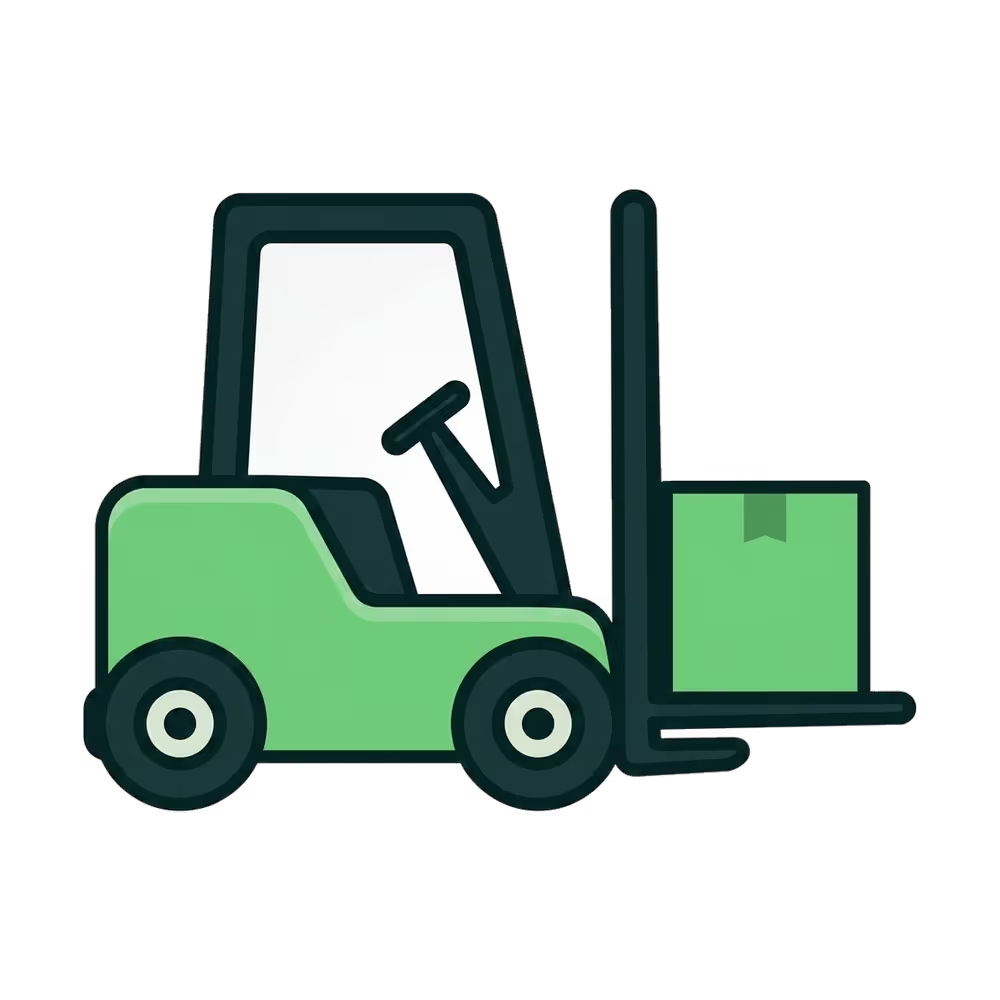
Cartons must not overhang the pallet edge as it exposes the goods to damage during normal handling by forklifts.

Using quality shrink wrap is strongly recommended to ensure that your goods arrive at their destination, and you can never use too much. Pallets that are strapped should be done so in all directions (north to south + east to west).
Large unboxed items need more than careful handling — they need to be properly secured before they're handed over.

Larger unpacked items such as engines or industrial equipment must be strapped to a pallet to ensure they do not move in transit.

Items should then be crated to further reduce risk by fully enclosing the goods with a quality hardwood crate. Spas in particular must be crated for transport. Roller doors require a corrugated iron protective sheet or crating.
Long items and exposed surfaces need specific protection.
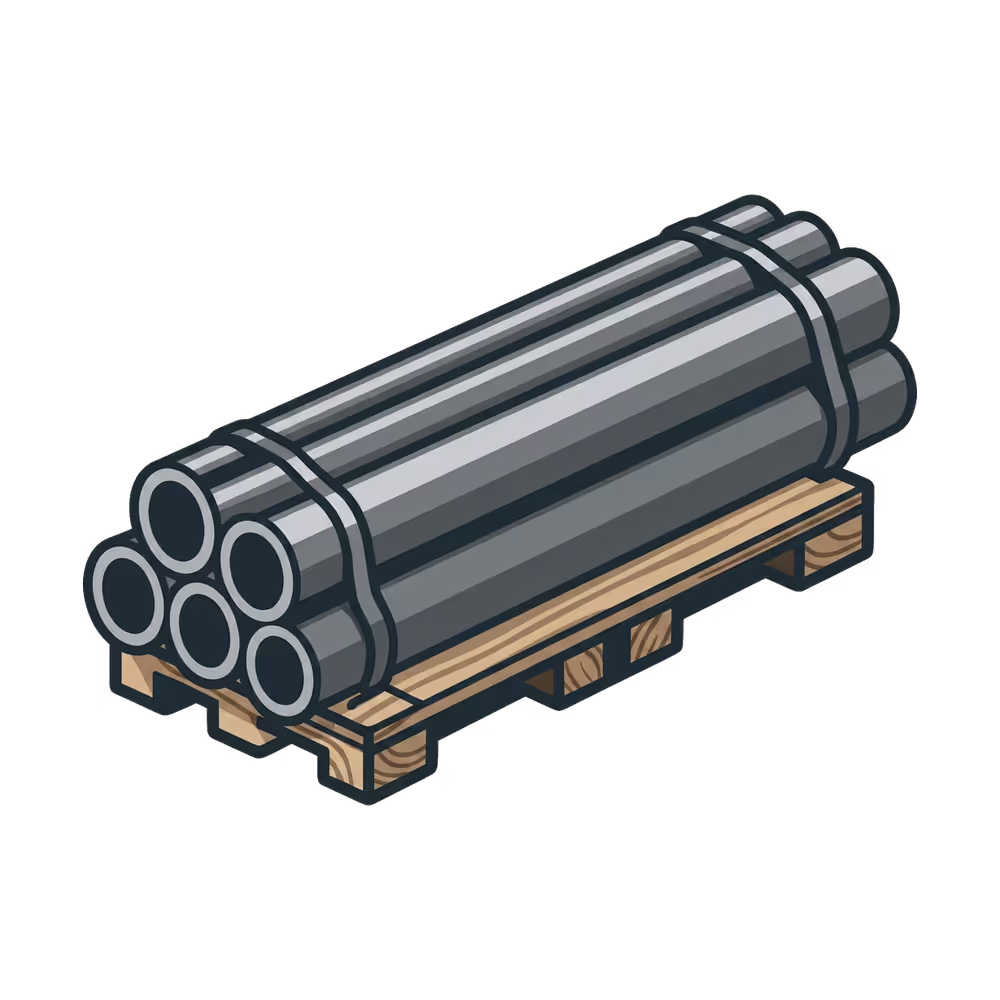
Heavy and long bundled items that do not fit in a case or crate must be strapped with steel strapping to a skid or pallet so they can be forklifted.

Lengths with exposed painted and finished surfaces must be protected by heavy duty wrapping to prevent any damage to the surface.

FAQs
Find answers to FAQs about shipping insurance for senders of freight.
Yes. If your goods are found to be inadequately packaged, your claim may be reduced or declined. These guidelines reflect what carriers and insurers consider a minimum standard for transit.
Yes, as long as it's in excellent structural condition — no crushing, no damaged edges, and internal flaps intact. Remove all labels from previous shipments before applying your new one.
Spas must always be crated. For other large or heavy unboxed items, crating is strongly recommended. If your item can't be fully enclosed in a carton and can't be strapped securely to a pallet, crating is the safest option.
There's no such thing as too much. Apply at minimum three full rotations from base to top. If you're also strapping, do so in both directions — north to south and east to west.
Yes. These packaging requirements apply to all shipments covered by FreightInsure.
Lodge a claim with FreightInsure as soon as possible after delivery. Before moving or unpacking the goods further, photograph the damage — this will support your claim.