
Named Best Insurance Innovation at the Finder Innovation Awards 2026

Industry Insights

Every freight and logistics business I talk to is trying to solve the same equation right now. Modernise or fall behind. Fund it without wrecking the margin.
Infrastructure needs upgrading. Fleets need refreshing. Logistics needs digitising. None of that is optional anymore, it's table stakes for staying competitive.
The capital required to do all three at once has never been higher. And most operators I speak with are trying to find that capital in the same three places: the bank, the investors, or their own margin. All three come with a cost.
I've spent the last four years building an insurtech inside freight, which means I've had a front row seat to how transport businesses actually think about money. And there's a pattern worth naming.
It's capital tied up doing nothing.
Most freight and logistics operators are sitting on risk they've never priced properly. Damaged goods, lost consignments, disputes with customers over who pays. Every one of those events either gets absorbed as a write off or settled quietly, and either way it sits on the books as dead weight.
That's capital that could have gone into a new route, a better platform, a fleet upgrade. Instead it's sitting there as an unpriced liability, waiting for the next bad week.
Ask most operators what freight loss and damage costs them and they'll quote the value of the goods. That's the smallest part of the bill.
There's the claims administration time. The staff hours spent chasing a resolution instead of running the business. The back and forth with a customer who's now less confident in the service. And sometimes, the customer who quietly moves their freight elsewhere next quarter.
Most businesses can point to the goods value without blinking. Very few can put a number on the rest. It sits scattered across customer service, operations and finance, never added up in one place, which means it never gets treated as the real cost it is. It just gets absorbed as the cost of doing business.
That's the trap. What doesn't get measured doesn't get managed, and what doesn't get managed keeps quietly eating margin every single week.
Marine insurance was built for large, infrequent, high value claims. It works well for that. It doesn't work well for the long tail of everyday freight loss and damage, the sort that happens weekly and sits well under the excess most policies carry.
That gap is where a lot of freight businesses quietly self insure without realising it. They absorb the cost, write it off, and move on. Multiply that across a year of consignments and it adds up to a meaningful drag on the capital they'd rather be putting toward growth.
Before raising debt or equity to fund modernisation, it's worth asking a simpler question first: how much capital is already trapped in risk you haven't priced?
A few things worth checking:
Where is loss and damage currently absorbed, and by whom. Is it a line item, or is it quietly eating into margin without anyone tracking it properly.
What would it cost to insure that risk properly, and does that cost sit below what you're currently losing to write offs.
Is the protection embedded at the point of shipment, or does someone have to remember to arrange it separately every time.
Answering those honestly often uncovers capital that was there all along.
There's been a lot of talk across the industry about embedded insurance. In practice, it's simpler than the term suggests.
Cover attaches automatically at the point of booking, per shipment, rather than a business arranging a separate annual policy and hoping it lines up with what actually moves. That shifts where the risk sits. Instead of the carrier absorbing the loss internally, or getting into a drawn out argument with a customer over who pays, an insurer carries the claim and a proper process handles it.
It also changes the purchase itself. Rather than a customer buying freight and then separately thinking about insurance, if they think about it at all, the two become one transaction. Covered freight, not freight plus an afterthought.
This is exactly the gap we built FreightInsure to close. Embedded, per shipment cover that sits inside the platforms freight businesses already use, insurance backed, so the underwriter carries the claim risk rather than the transport company.
The point isn't to sell insurance for the sake of it. It's to stop capital leaking out through a channel most businesses have stopped noticing. In 2025 the number of active policies on the platform grew 35.9% year on year, and our distributor network grew 45.5% over the same period. That growth tells me this isn't a niche problem. It's a structural one across the industry.
Freeing up capital that's currently sitting in unpriced risk won't fund a whole fleet refresh on its own. But it's capital you already have, and it doesn't come with a term sheet attached.
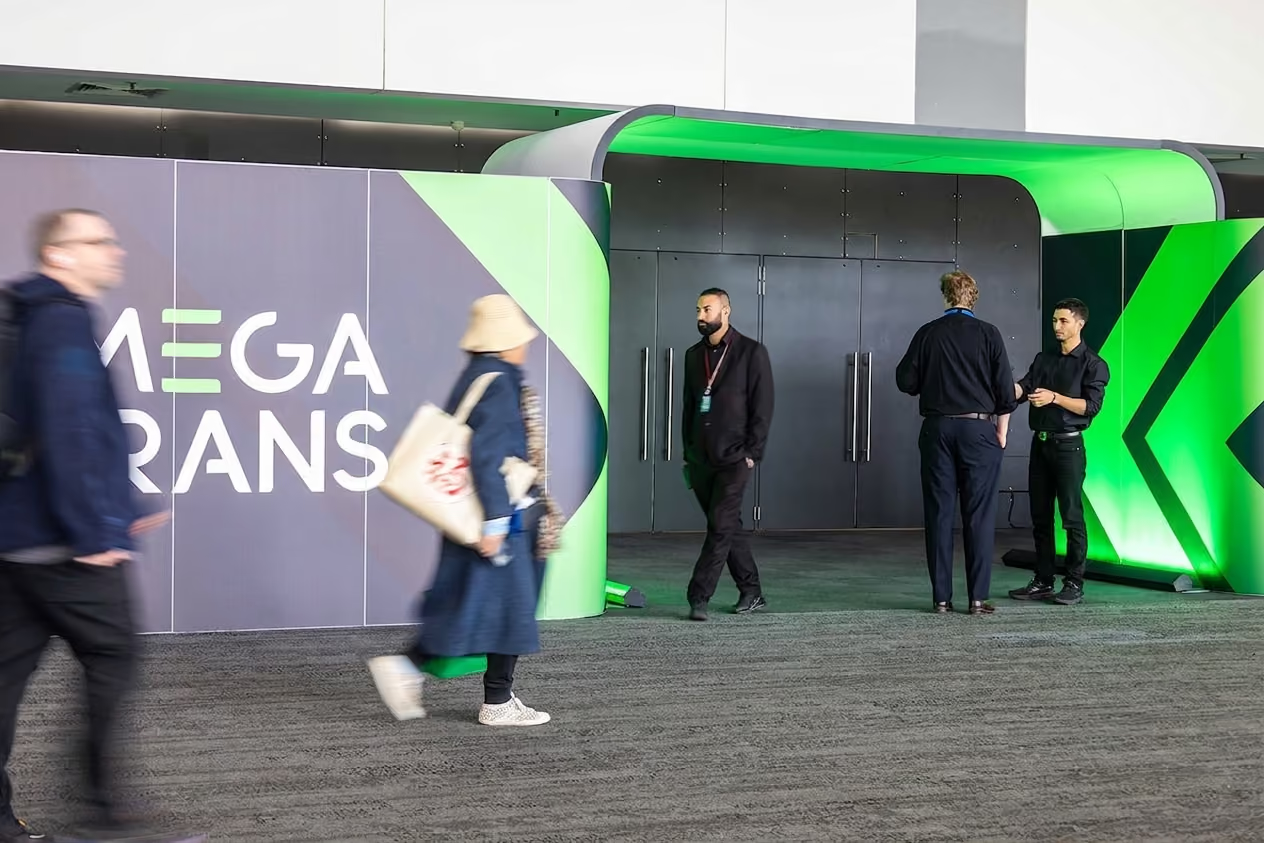
I'm joining Renati Barel, Piers Gorman and Mayor Teresa Harding on the MegaTrans Main Stage on 16 September to dig into this properly, from the finance broker's view, the platform view, and the local government view of infrastructure investment. If you're at the Melbourne Convention and Exhibition Centre that day, come find the session at 2:05pm. I'd rather have this conversation with a room than write about it alone.
You can see the full session details on the MegaTrans Main Stage Schedule, and read a bit more about what we've built at freightinsure.com.
.avif)
Industry Insights
.avif)
Company News

Company News